What Are the Top Types of Pleats Please Trousers?
Pleats Please Trousers are not one uniform shape. Their fine, springy pleats can fall into straight-leg, wide-leg, tapered, or cropped silhouettes, each changing how the fabric moves and where the outfit feels balanced. A wide leg gives the pleats room to swing; a tapered cut brings more focus to the ankle. Small details matter. Check the waistband, hem length, and how the pleats sit when standing and walking, not only in a product photo.
Industry data offers useful context, but not a direct ranking of trouser styles. McKinsey and The Business of Fashion’s State of Fashion 2024 reported that surveyed executives expected global fashion sales to grow by 2–4% that year. Textile Exchange’s Materials Market Report 2024 put global fiber production at 124 million tonnes in 2023, highlighting why fabric composition deserves attention alongside cut. These figures describe the wider market, not Pleats Please sales or customer preferences. That distinction matters.
This guide compares the main silhouettes by fit, movement, and styling potential, while noting where each may feel less practical. A cropped pair can show off shoes, yet may shorten the line of an outfit. A roomy cut looks effortless, though it can overwhelm a petite frame. I may be giving proportion too much weight; comfort is harder to measure. Still, trying the trousers on and checking the care label can tell you more than a trend ranking alone.
Classify Pleats Please Trousers by Leg Shape, Rise, and Hem Width
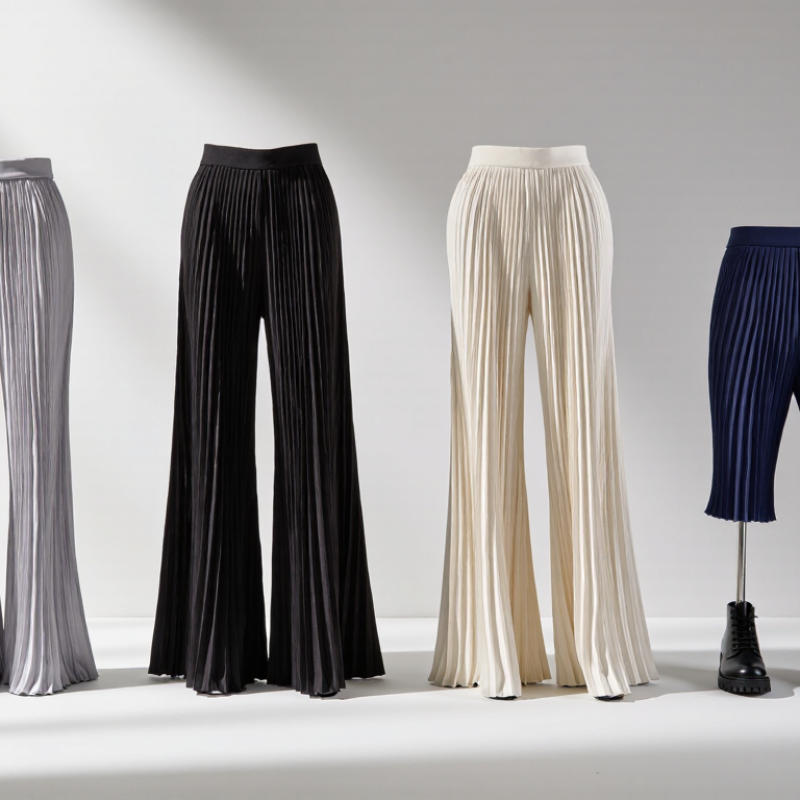
Pleated trousers are best classified by leg shape, rise, and hem width. A straight leg hangs evenly from hip to ankle and works well with crisp pleats and loafers. A tapered leg narrows below the knee, keeping extra fabric from bunching at the shoe. Wide legs create a fluid line; they look balanced with a shorter jacket or a tucked-in shirt. Small detail. Big effect.
Rise changes both comfort and proportion. A mid-rise waistband usually sits near the natural waist, while a high rise gives more room between waistband and crotch. Check the pleats while seated: if they pull open, the rise or seat may be too tight. Hem width matters, too. A narrow opening suits a cleaner, cropped finish; a wider opening falls neatly over a substantial shoe. There is no perfect formula. Body proportions vary, and fabric drape can change the result.
Tips: Measure the hem flat across, then double that figure for the opening circumference. Compare it with trousers you already like. The National Retail Federation’s 2023 Retail Returns Landscape estimated returns at 14.5% of U.S. retail sales, or about $743 billion. That figure covers all retail, not trousers specifically, but it underlines why checking fit before buying matters. Sit, walk, and inspect the front pleats in natural light.
Straight-Leg Styles: 100% Polyester and Heat-Set Pleat Construction
Straight-leg pleated trousers offer a clean shape without feeling stiff. Their 100% polyester fabric is usually lightweight, quick to dry, and less prone to wrinkling than many natural fibers. That can make them useful for travel or long workdays. The straight cut also gives the pleats room to fall vertically, rather than pulling sharply across the hips.
Heat-set pleats are formed with heat so the folds hold their shape through regular wear. Look closely at the spacing: crisp, even lines often create a more polished appearance, while crowded pleats can add bulk around the waistband. The fabric may feel smooth and slightly cool against the skin. In warm weather, though, polyester can feel less breathable than cotton or linen. A small trade-off.
For a balanced outfit, try a tucked-in knit top or a short jacket that ends near the hip. Check the hem with your usual shoes; a slight break can keep the leg line tidy. Care still matters. Follow the garment label, and avoid pressing directly over the pleats unless the instructions allow it. They are durable, not indestructible. After repeated washing, folds may soften or look uneven, and that is worth considering before choosing this style.
Wide-Leg and Culotte Styles: Compare Fabric Weight Using ASTM D3776
What Are the Top Types of Pleats Please Trousers?
Wide-leg trousers and culottes can both carry crisp pleats, but their shape alone does not reveal fabric weight. A wide leg may use a light cloth that swings around the ankle, or a heavier one that holds a clean column. Culottes often end higher, so excess weight can make the hem feel stiff. But that is not guaranteed. Fiber, weave, lining, and pleat construction also affect how a pair hangs.
ASTM D3776/D3776M provides methods for measuring fabric mass per unit area, commonly reported in grams per square meter. For a fair comparison, test swatches under the same method and conditions. A higher result means more mass per area; it does not automatically mean better quality or a more flattering drape. In practice, lay similar-sized swatches over a table edge and watch how quickly they fall. The test gives a number, while the edge reveals movement. I would not treat either clue as the whole story.
Tips: Compare the same fabric layer, not a lined trouser against an unlined one. Record the test method and units beside each result. Then try the fabric in motion: walk, sit, and check whether the pleats reopen. A small caveat matters here: swatches may not behave exactly like finished trousers, especially when stitching and waistband structure add support.
Tapered and Cropped Styles: Assess Inseam and Ankle Opening in Centimeters
For tapered, cropped trousers, inseam and ankle opening help explain how the shape will sit on your body. Measure the inseam from the crotch seam to the hem, following the inside leg. Lay the garment flat without stretching the pleated fabric. A 62 cm inseam, for example, may finish above the ankle on one wearer and closer to it on another. Height and rise both affect the result. Treat any number as a starting point, not a fit guarantee.
Ankle opening measurements need careful reading. If a listing gives the garment’s flat width, double it to estimate the full opening circumference. A flat width of 17 cm is roughly a 34 cm circumference. That distinction matters when comparing trousers or checking whether the hem will clear a shoe. Measure your preferred pair the same way. Small details matter.
For a cropped tapered look, compare both numbers with trousers you already like, then consider the shoes you plan to wear. A narrower opening can sharpen the line, but may catch on a high-top shoe. A wider hem can feel easier, though it may soften the tapered profile. Fabric folds can also make measuring less exact; smooth them gently, but do not pull them flat. I would not rely on inseam alone. Size charts help, yet a chart cannot predict every drape or personal preference.
What Are the Top Types of Pleated Trousers? — Tapered and Cropped Styles: Assess Inseam and Ankle Opening in Centimeters
Typical adult garment-measurement ranges for comparing common pleated-trouser cuts
| Trouser style |
Typical silhouette |
Inseam (cm) |
Ankle opening circumference (cm) |
Best suited to |
| Full-length tapered |
Roomier through the thigh, narrowing toward the hem; usually reaches the shoe. |
76–82 |
34–42 |
A classic ankle-to-shoe-length look with a clean, tapered finish. |
| Ankle-length tapered |
A tapered leg ending near the ankle bone, with little or no break over the shoe. |
68–74 |
32–40 |
Showing the ankle or pairing trousers with low-profile shoes. |
| Cropped tapered |
A shorter inseam and a narrowing leg; the hem sits above the ankle. |
60–68 |
30–38 |
A distinctly cropped proportion or warmer-weather outfits. |
| Relaxed tapered |
Extra ease through the seat and thigh, balanced by a narrower hem. |
70–80 |
36–44 |
A less fitted upper leg while keeping a defined ankle line. |
| Wide cropped |
A broad leg that falls straight or gently outward, ending above the ankle. |
58–68 |
44–60 |
A roomier cropped silhouette with a visibly wider hem. |
Measurement note: These are general comparison ranges, not measurements for a particular maker or label. Inseam is measured from the crotch seam to the hem. Ankle opening is the circumference of the finished hem; garment measurements vary by size, rise, fabric, and intended fit.
Check Fiber Composition with ISO 1833 Before Comparing Fit and Care
Pleated trousers commonly appear in straight-leg, tapered, wide-leg, and cropped cuts. Their pleats may sit flat or open slightly when you move. A deep front pleat can add room across the hips, while a tapered ankle changes the overall shape. The cut matters, but fiber content affects how the fabric feels and behaves.
Before comparing fit or care, check the stated fiber percentages. If the label is unclear, ISO 1833 methods can help identify the proportions of fibers in a textile blend through chemical analysis. This matters because a wool-and-polyester fabric may respond differently to washing and pressing than cotton or viscose. Still, composition alone cannot tell you whether trousers will drape softly or feel restrictive. The weave and fabric weight matter too.
Try comparing similar cuts in fabrics with verified compositions. Notice how the waistband sits when you bend, and whether pleats pull open while seated. Small details count. For care, follow the garment label rather than guessing from fiber names; finishes and linings can change the instructions. ISO 1833 does not test shrinkage, colorfastness, or comfort. I have found fiber percentages useful, but not decisive. One limitation is easy to miss: two fabrics with the same blend can feel surprisingly different.