Leave Your Message

Where to Buy the Best China Mini Pleated Dress?

Finding the best place to buy a China Mini Pleated Dress requires more than attractive photos. China’s online fashion market is broad, competitive, and sometimes inconsistent. The China Internet Network Information Center reported 915 million online shoppers in China by December 2023. The National Bureau of Statistics also recorded RMB 13.02 trillion in online retail sales of physical goods in 2023. These figures show strong choice, but they also demand careful screening.

A reliable search should examine fabric composition, pleat recovery, stitching, lining, and size accuracy. Polyester blends may hold sharp pleats well, while lighter fabrics can improve movement and comfort. Ask sellers for close-up images. Request measurements taken flat, including waist, hip, length, and waistband stretch. A good supplier should answer clearly and provide consistent product details. Not every polished storefront deserves trust.

Look for verified transaction history, recent customer photographs, transparent return policies, and secure payment options. For wholesale buyers, platforms such as Alibaba.com, Made-in-China.com, and established manufacturer websites can support supplier comparison. However, platform presence alone proves little. Check business credentials, sample quality, production capacity, and communication speed. Independent textile testing can also confirm fiber content and colorfastness.

The McKinsey State of Fashion reports continue to emphasize value-conscious fashion consumption and stronger expectations for product quality. That matters here. The lowest price may hide weak pleats, uneven hems, or expensive returns. I would compare at least three samples before placing a larger order. This takes time. It also reduces avoidable mistakes. The best China Mini Pleated Dress is not simply the cheapest option; it is the one matching verified quality, fit, delivery reliability, and buyer expectations.

Where to Buy the Best China Mini Pleated Dress?

What Is a China Mini Pleated Dress?

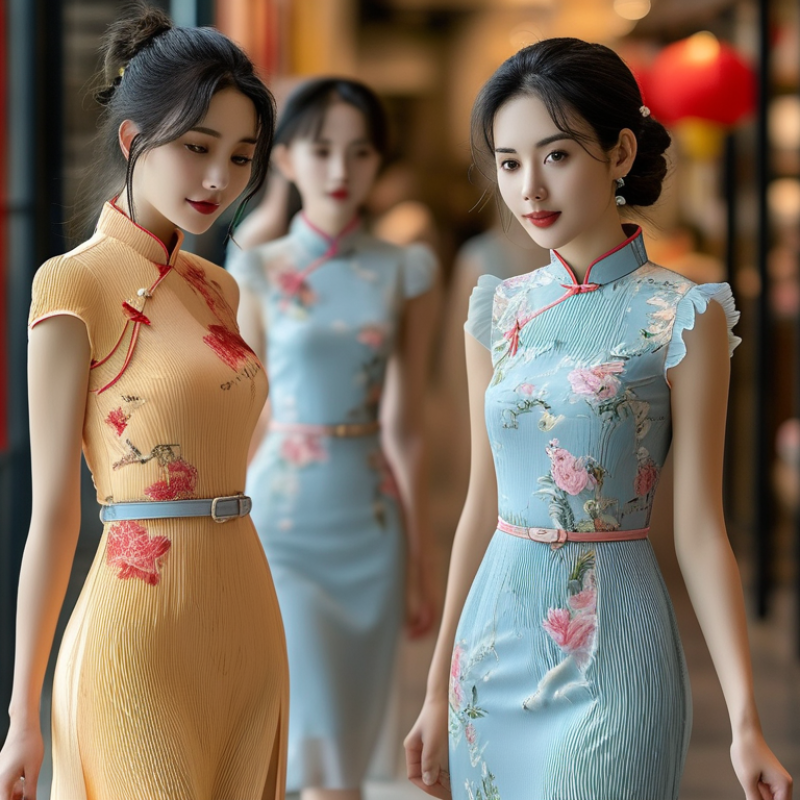
A China mini pleated dress is a short dress featuring repeated folds in the fabric, often made or sold through Chinese clothing suppliers. “China” usually describes its production or marketplace origin. It does not automatically mean the design is traditional Chinese clothing. Some styles include modern collars, puff sleeves, or subtle Mandarin-inspired details.

The pleats create movement around the skirt. They can also make the dress look fuller without heavy fabric. Common materials include polyester, chiffon, and lightweight woven blends. Each behaves differently. Polyester usually holds pleats well, while soft chiffon may need careful steaming. Check the lining, waistband, and hem closely. These details often reveal more than product photos.

I have found that sizing can vary between suppliers. A mini length may also look different on different heights. Measure the bust, waist, shoulder, and total length before ordering. Do not rely only on a small, medium, or large label. Product images may hide loose threads or uneven pleats. That is not always a serious flaw, but it deserves attention. Ask for fabric details and real measurements when information seems incomplete. A dependable seller should explain care instructions, construction, and return conditions clearly.

Key Features to Check Before Buying

When buying a China mini pleated dress, inspect construction before chasing the lowest price. The McKinsey–BoF State of Fashion 2024 report expected global fashion growth of only 2% to 4%. That makes durability more valuable than a dramatic product photo. Check the fabric label, fiber percentage, and fabric weight. Polyester holds pleats well, but thin fabric may reveal pockets or cling to tights. Textile Exchange’s 2024 Materials Market Report identified polyester as the dominant global fiber, representing about 57% of production in 2023. Ask whether the material is virgin or recycled.

Pleats should recover. Gently pinch one fold, release it, and watch for flattening or uneven spacing. Examine the waistband for straight stitching, secure seams, and enough room for sitting comfortably. A concealed zipper should move without catching the lining. Measure your waist, hips, and dress length against the seller’s chart, not your usual size. Chinese sizing can vary between factories. I still misjudge this sometimes. Check twice.

Request close-up photos of the hem, inner seam, and lining. Confirm the washing method, because heat can damage permanent pleats. For quality control, ask whether the supplier follows recognized textile tests, such as ISO 6330 for washing procedures and ISO 12945 for pilling resistance. A small sample order is safer than a large purchase. Compare the received measurements with the listing and record defects immediately. Reliable sellers should answer clearly, provide material details, and explain their inspection process. Fancy packaging means little. Consistent workmanship matters more.

Where to Buy the Best China Mini Pleated Dress?

Key features to check before buying, ranked by a practical 100-point buyer checklist.

Use this checklist to compare product listings: verify fabric details, pleat recovery, lining, construction quality, size measurements, and care instructions before placing an order.

Where to Find Reliable China Mini Pleated Dress Suppliers

Where to Find Reliable China Mini Pleated Dress Suppliers

China remains a major sourcing market for mini pleated dresses. The WTO’s World Trade Statistical Review 2024 reported that China supplied about 31% of global clothing exports in 2023. This scale offers varied fabrics, flexible production, and competitive sampling costs. However, large capacity does not guarantee consistent quality. I have seen attractive samples fail during bulk production. That lesson still matters.

Reliable suppliers should provide clear size charts, fabric composition, pleat recovery tests, and production photos. Ask for a pre-production sample before confirming quantities. Check whether the supplier can control shrinkage after washing. The 2024 State of Fashion report from McKinsey highlights growing pressure for speed, value, and supply-chain flexibility. A suitable supplier should therefore explain lead times honestly, including delays caused by fabric sourcing or inspection.

Tips: Request two samples from different batches. Compare pleat spacing, seam strength, lining, and waist recovery. Confirm the inspection standard in writing. A small trial order is safer than a rushed large order. Do not rely only on polished catalog images. Supplier communication can look professional, yet details may remain weak. Review documents, test garments, and record every correction before production.

How to Compare Quality, Prices, and Customization Options

Where to Buy the Best China Mini Pleated Dress?

Comparing suppliers requires more than checking the lowest quotation. Request a physical sample first, then inspect pleat recovery after washing, seam density, lining weight, zipper smoothness, and color consistency. A good sample should keep its shape after gentle steaming. It should also fit the measurement chart without excessive pulling at the waist. Ask for fabric composition and test reports for shrinkage, colorfastness, and pilling. Textile Exchange’s Materials Market Report 2024 states that polyester represented about 57% of global fiber production in 2023. Therefore, recycled or virgin polyester can change both price and performance.

Compare the full landed cost, not only the factory price. Include sampling fees, packaging, inspection, freight, and possible alteration charges. The State of Fashion 2025 report describes fashion growth as low and consumers as increasingly value-conscious. That makes durability an important price factor. Ask for tiered quotes at different quantities, but do not assume larger orders are automatically better. Custom options may include pleat width, skirt length, lining, waistband construction, labels, and color matching. Provide a graded size chart and approved color swatch. Small details matter.

A useful warning: attractive photos can hide uneven pleats. I have seen specifications become vague during revisions. Keep every change in writing. One overlooked measurement can create expensive rework. Evaluate at least three suppliers using the same checklist, sample standard, and delivery terms. Supplier audits, clear inspection records, and transparent communication offer stronger evidence than polished showroom images.

What to Know About Ordering and Shipping Dresses from China

Where to Buy the Best China Mini Pleated Dress?

Ordering a China-made mini pleated dress requires more than comparing product photos. Ask for fabric composition, finished measurements, pleat direction, lining details, and a clear size chart. A sample is essential because pleats can flatten during packing or change after washing. Measure twice. Check once.

Request real production photos, stitching close-ups, and a video showing the dress moving. Confirm the minimum order quantity, sample fee, production time, and packaging method in writing. The World Bank’s 2023 Logistics Performance Index ranked China 19th among 139 economies, with a score of 3.7. However, strong national logistics do not guarantee every supplier performs equally. Factory communication still matters.

Shipping costs can change the real purchase price. Ask whether the quotation includes export handling, freight, duties, and final delivery. The International Chamber of Commerce’s Incoterms guidance helps clarify these responsibilities, but local import charges may remain uncertain. Sea freight usually costs less for larger orders, while air shipping suits samples and urgent quantities. UNCTAD reports that maritime transport carries over 80% of global merchandise trade by volume, so port delays can affect delivery schedules. Leave buffer time.

Inspect the parcel immediately after arrival. Record damaged packaging and compare the delivered measurements with the approved sample. A small mistake in waist measurement can make a fashionable dress unwearable. This step is easy to skip. It should not be.

Where to Buy the Best China Mini Pleated Dress? - What to Know About Ordering and Shipping Dresses from China

Buying and Shipping Dimension What to Check Typical Information for China-Sourced Mini Pleated Dresses Why It Matters
Dress Style Confirm the pleat type, skirt length, neckline, sleeve design, lining, and fastening method. Common options include knife pleats, accordion pleats, sleeveless or short-sleeve cuts, concealed zippers, and lined bodices. Photos may not show construction details clearly, so the written specification should match the product images.
Fabric Composition Ask for the fiber content and fabric weight before ordering. Frequently used materials include polyester, polyester blends, cotton blends, and synthetic satin-like fabrics. Exact composition varies by item. Fiber content affects comfort, wrinkle resistance, shine, durability, and washing requirements.
Pleat Quality Check whether the pleats are permanently set and whether they remain even from the waistband to the hem. Heat-set synthetic fabrics generally hold pleats better than many untreated natural-fiber fabrics, although washing and heat exposure can still affect the shape. Uneven or weakly set pleats can make the dress look different from the listing photographs.
Size Selection Compare your bust, waist, hip, and garment length measurements with the seller's size chart. Chinese clothing size labels may not correspond directly to US, UK, or EU sizing. A measurement chart in centimeters is more reliable than the letter size alone. Taking measurements before purchase reduces the risk of ordering a dress that is too tight or too short.
Fit Tolerance Look for stated measurement tolerances and determine whether the waist has elastic or adjustable features. Manufacturing measurements can differ slightly from the published chart. Elastic waistbands and loose pleated skirts generally provide more flexibility. Pleated fabric may hide some differences in hip width, but it cannot correct an incorrectly sized bodice or waistband.
Sample or Single-Item Order Ask whether one unit can be purchased before placing a larger order. A sample order allows inspection of fabric, color, stitching, lining, zipper quality, and actual measurements. Sampling is especially useful when ordering for resale, events, uniforms, or customized production.
Customization Confirm the minimum order quantity, size range, color options, logo requirements, and approval process for samples. Custom production commonly requires additional sampling time and may have minimum quantities that are higher than standard ready-to-ship items. Customization can change the total price, production schedule, packaging, and return conditions.
Ready-to-Ship Timing Ask whether the dress is already made and available in the selected color and size. Ready-to-ship orders usually avoid the manufacturing stage, but processing, quality checking, and packing still take time. This option is generally more suitable when a fixed delivery date is important.
Custom Production Timing Request a written production schedule that separates sampling, bulk production, inspection, and dispatch. Custom orders typically require more time than standard stock because fabric preparation, cutting, sewing, pleating, and quality inspection must be completed. Production time is separate from shipping time and should not be treated as the delivery estimate.
Shipping Method Compare express courier, air freight, and sea freight based on parcel size, weight, urgency, and destination. Express courier is usually fastest; air freight suits larger shipments; sea freight is generally slower but more economical for bulky commercial orders. The lowest shipping price is not always the best option when delivery time or tracking reliability is important.
Transit Time Request an estimated transit range and ask whether weekends, holidays, customs delays, and remote-area delivery are included. International delivery time varies by destination, service level, customs processing, carrier capacity, and seasonal demand. A shipping estimate should be treated as a range rather than a guaranteed arrival date.
Shipping Weight and Packaging Confirm the chargeable weight, carton dimensions, folding method, and protection against moisture. Carriers may calculate charges using actual weight or volumetric weight, whichever is higher. Multiple dresses may be packed in cartons or compressed protective packaging. Packaging dimensions can affect the final shipping charge even when the garments themselves are lightweight.
Tracking and Insurance Check whether tracking is included and whether loss or damage coverage is available. Tracked services provide shipment updates. Insurance or carrier compensation may be subject to declared value, service terms, and exclusions. Tracking and documented shipment records make it easier to investigate delays or delivery problems.
Import Duties and Taxes Determine which party is responsible for customs clearance, import duty, sales tax, and brokerage charges. Import costs depend on the destination country's rules, product classification, declared value, textile composition, and shipping terms. The product price and freight charge may not represent the complete landed cost.
Shipping Terms Read the agreed delivery term and confirm whether duties and taxes are included. Terms such as Delivered Duty Paid and Delivered at Place allocate customs and delivery responsibilities differently. The exact agreement should be stated in the order documents. Clear responsibilities help prevent unexpected charges when the parcel reaches the destination country.
Color Verification Request a color reference, fabric swatch, or daylight photograph for important orders. Screen settings, studio lighting, fabric finish, and dye-lot variation can make the displayed color differ from the delivered garment. A physical swatch is more dependable than relying only on online product images.
Quality Inspection Inspect pleat alignment, seams, hems, lining, stains, loose threads, zipper operation, and measurements. A pre-shipment inspection can be performed using photographs, measurement records, or an independent inspection service. Problems are easier and less costly to resolve before the order leaves the shipping origin.
Return and Alteration Policy Review the conditions for returns, exchanges, defects, incorrect sizes, and customized items. Return availability may differ for ready-made and made-to-order dresses. International return shipping can be expensive and may not be refundable. Understanding the policy before payment helps avoid disputes over fit and product expectations.
Total Landed Cost Calculate garment price, domestic handling, international freight, insurance, customs charges, taxes, brokerage, and possible alteration costs. The final cost is usually higher than the listed unit price, especially for small international orders or shipments requiring customs processing. Comparing landed cost gives a more accurate basis for choosing the best purchasing option.
Recommended Buying Practice Use a written specification and confirm all details before payment. Record the fabric composition, measurements, color, quantity, packaging, delivery term, production schedule, shipping method, and defect-resolution process. A complete order record reduces misunderstandings and provides useful evidence if a correction or claim is needed.
Important: Delivery times, customs charges, taxes, minimum order quantities, and return conditions vary by destination, order size, product type, and seller agreement. Confirm the final terms in writing before placing an order.