Leave Your Message

10 Tips for Buying the Perfect Midi Pleated Dress

A Midi Pleated Dress can look effortless, but the right choice depends on more than a flattering photograph. Pleat depth, fabric weight, waist placement, and hem movement all affect the final silhouette. A lightweight polyester dress may swing beautifully at the knee, while a heavier satin version can hold sharper folds. Fit matters too. The waist should sit comfortably without crushing the pleats.

The State of Fashion 2025 report by McKinsey & Company expects global fashion growth to remain modest, at around 2–4 percent. That slower market makes thoughtful purchasing more valuable. The Business Research Company also identifies continued growth in women’s apparel, although broad market data rarely isolates the Midi Pleated Dress category. That limitation deserves attention. A large market forecast does not guarantee quality, comfort, or lasting style.

Issey Miyake, the celebrated pleating pioneer, once said, “Design is not for philosophy—it is for life.” His idea remains practical here. A dress should survive sitting, walking, commuting, and repeated washing. Check the care label. Run your fingers over the pleats. Look for even spacing, secure seams, and lining that does not cling. These small details often reveal more than a polished campaign image.

The following ten tips examine proportion, fabric, construction, color, sizing, and versatility. They also question a common assumption: more dramatic pleats do not always create a better dress. Sometimes, the quietest movement feels most useful.

10 Tips for Buying the Perfect Midi Pleated Dress

Define Midi Pleated Dresses by Hem Length, Pleat Type, and Fabric Structure

10 Tips for Buying the Perfect Midi Pleated Dress

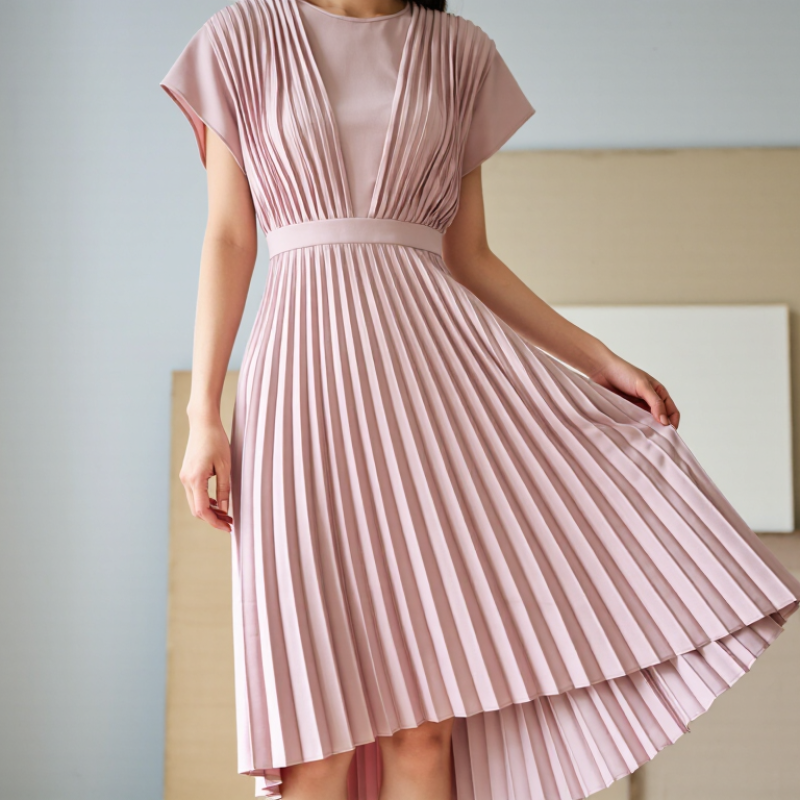
Define a midi pleated dress by its hem, pleat type, and fabric structure. The hem usually falls between the knee and mid-calf, but proportions change with height. A skirt ending below the widest calf point can look longer than expected. Try walking, sitting, and climbing stairs before deciding. Tip: Check the hem from every angle. A tape measure helps, but movement matters more.

Pleats create different visual effects. Knife pleats look crisp and directional, while accordion pleats offer softer movement. Box pleats add structure and can increase volume around the hips. Sunray pleats often create a gradual, radiating shape. Look closely at the stitching and spacing. Uneven folds may signal weak construction, though even skilled garments can relax after wear.

My practical mistake was judging pleats under store lighting. Natural daylight revealed unwanted shine and transparency.

Fabric structure controls comfort, weight, and recovery. Textile Exchange’s 2024 Materials Market Report recorded global fiber production at about 124 million tonnes in 2023, with polyester representing roughly 57%. That scale makes fiber content worth checking, not ignoring. Polyester may hold pleats well, while viscose can feel fluid but wrinkle more easily. Cotton blends may breathe better, yet they can lose sharpness.

Tip: Scrunch a hidden section gently. Watch how quickly it recovers. Also inspect the lining, waistband, and care label. A beautiful dress requiring unrealistic maintenance may become an expensive regret.

Set a Budget with Current Apparel Pricing and Fiber-Market Benchmarks

Before shopping, set a realistic budget for the entire garment, not just the dress tag. In today’s market, a well-made midi pleated dress often costs about $70 to $180. Premium construction may exceed $200. Pleating, lining, labor, shipping, and quality control affect the final price. Fiber costs matter, but they are only one part of the calculation.

Cotton and viscose can bring a soft, breathable feel, yet their prices shift with harvests and processing demand. Polyester usually supports a lower retail price and holds pleats well. Recycled polyester may cost more because sorting and certification add work. Silk remains expensive, especially when the fabric has a dense, stable pleat. Compare fiber content with the price. A high percentage of synthetic fiber should not automatically justify a high markup.

I usually reserve 10% for alterations, because midi lengths and waist placement rarely fit perfectly off the rack. Check the hem, lining, and pleat recovery under bright light. The pleats should return after gentle movement. I once chose a cheaper dress with attractive folds, but the fabric relaxed after one afternoon. My original estimate was too optimistic. A useful budget split is 60% for the dress, 20% for tailoring and care, and 20% for uncertainty. Leave room for mistakes.

10 Tips for Buying the Perfect Midi Pleated Dress

Set a realistic budget by comparing indicative global fiber-market benchmarks with typical retail price bands for midi dresses.

Fiber prices are shown in approximate USD per kilogram using publicly reported 2024–2025 benchmark ranges for commonly used apparel fibers. Raw-fiber cost is only one part of a dress price; construction, pleating, labor, transport, duties, and retail margins can make the final garment several times more expensive. For a well-made midi pleated dress, a practical starting budget is about $75–$150, while premium natural-fiber or tailored designs may exceed $200.

Assess Pleat Quality Using AATCC Colorfastness and Care-Test Standards

When buying the perfect midi pleated dress, inspect the pleats under natural light. They should look even, sharp, and securely pressed from waist to hem. Uneven spacing may signal rushed finishing. Gently stretch the skirt, then release it. Quality pleats should recover without obvious ripples.

Color performance matters too. Ask whether the fabric was tested with relevant AATCC methods. AATCC TM61 evaluates colorfastness to accelerated laundering. AATCC TM8 examines color transfer through crocking, which matters when a dark skirt touches pale bags or seats. Perspiration testing can reveal fading near the waistband and underarms. These results are useful evidence, not decoration.

Care testing deserves equal attention. AATCC TM135 can assess dimensional changes after home laundering, while appearance evaluations may show whether pleats flatten, twist, or lose their shape. Read the care label carefully. “Dry clean only” changes the real cost of ownership. If a seller provides test details, check the fabric, test method, washing cycle, and rating scale. A passing result does not guarantee perfect wear in every home. I once trusted a strong color rating but ignored heat exposure; the pleats later looked tired. That was my mistake. Also check lining movement, hem balance, and loose threads. Try sitting down before purchasing. The waist may feel fine standing, yet pinch after ten minutes. A small flaw can become a daily annoyance.

10 Tips for Buying the Perfect Midi Pleated Dress - Assess Pleat Quality Using AATCC Colorfastness and Care-Test Standards

Use this buyer-focused checklist to evaluate pleat definition, color stability, dimensional performance, and care requirements before purchasing a midi pleated dress. The target values below are practical screening benchmarks; official evaluations should be performed by a qualified textile laboratory.

Tip Buying Focus Relevant AATCC Method or Care-Test Reference What to Check Practical Buyer Target Buying Decision
1 Confirm even pleat spacing AATCC TM 135
Dimensional Changes of Fabrics after Home Laundering
Measure the width of several pleats at the waist, hip, and hem. Compare the spacing before and after the recommended wash process. Pleat spacing should remain visually uniform, with no obvious pleat collapse, twisting, or irregular widening. Choose the dress only when the pleats remain aligned across the full skirt panel.
2 Check color change after washing AATCC TM 61
Colorfastness to Laundering: Accelerated
Review the care label and, where possible, request laundering test data for the actual fabric and dyed color. A color-change rating of 4 or higher on the AATCC Gray Scale is a strong retail screening target. Be cautious with dark or saturated colors that show noticeable fading after one or more care cycles.
3 Inspect color transfer from rubbing AATCC TM 8
Colorfastness to Crocking: Crockmeter Method
Rub a hidden area with a dry white cloth and then with a slightly damp white cloth. Inspect both cloth and dress surface. Aim for a staining rating of 4 or higher for dry crocking and at least 3–4 for wet crocking. Reject garments that visibly transfer dye to the cloth, skin, or light-colored accessories.
4 Evaluate perspiration resistance AATCC TM 15
Colorfastness to Perspiration
Give special attention to underarms, waistband, neckline, and areas likely to contact skin during warm weather. A color-change rating of 4 or higher and staining ratings of at least 3–4 are practical purchase targets. For frequent summer wear, prefer colors and fabrics with stronger perspiration-colorfastness performance.
5 Review light exposure performance AATCC TM 16.3
Colorfastness to Light: Xenon-Arc
Ask whether the garment is intended for extended outdoor use and check for likely fading on the shoulder, upper skirt, or exposed folds. For outdoor or travel use, select a tested lightfastness result appropriate to the intended exposure level rather than relying only on appearance in-store. Use extra caution with bright, deep, or neon shades that may fade more noticeably in strong sunlight.
6 Measure length and width stability AATCC TM 135
Dimensional Changes of Fabrics after Home Laundering
Compare the garment measurements with the size chart, then verify whether the fabric is likely to shrink or stretch after care. A practical screening preference is dimensional change within approximately ±3% after the recommended care cycle. Allow for possible hem-length changes because even small shifts can alter the midi proportion.
7 Check pleat recovery after compression AATCC TM 135 and appearance assessment after care Gently compress a pleated section by hand, release it, and observe whether the folds return without permanent flattening or shine. Pleats should recover their original direction and depth without severe puckering, glazing, or seam distortion. Prefer construction with stable pleat memory, especially when the dress will be packed for travel.
8 Match the care label to your routine AATCC TM 135
Home laundering evaluation
Check whether the dress requires hand washing, a delicate cycle, low-temperature drying, line drying, or professional care. The safest option is a clear care label that matches your available washing and drying methods. Do not purchase a garment requiring care that you cannot consistently follow; pleat shape can be permanently affected.
9 Inspect seams, waistband, and hem alignment Dimensional and appearance assessment after care Look for straight seams, secure thread tension, a level hem, and pleats that meet evenly at the waistband and side seams. No skipped stitches, loose threads, seam puckering, or visible mismatch between adjoining pleat panels. Reject construction defects because they can become more visible after laundering or pressing.
10 Assess lining and color contrast AATCC TM 61, TM 8, and TM 15
Colorfastness screening for garment components
Check whether the lining, waist tape, zipper area, and decorative components remain compatible with the outer fabric during washing, rubbing, and perspiration. The lining should not show severe contrast staining, bleed into the outer fabric, or create visible shade differences between pleat layers. Choose a dress with coordinated, colorfast components and a lining that does not restrict pleat movement.

Rating reference: AATCC Gray Scale ratings commonly range from 1 to 5, where 5 represents excellent colorfastness and 1 represents very poor colorfastness. Always follow the garment’s care label and consider the fabric composition, dye depth, pleat construction, and intended frequency of wear.

Verify Fit Through ISO 8559 Body Measurements and Brand Size Charts

Buying a midi pleated dress becomes easier when fit checks begin with measurements, not guesswork. ISO 8559 provides consistent definitions for body measurements, including bust, waist, and hip circumference. Use a soft tape over light clothing, keeping it level without tightening. Stand naturally. Record each result in centimeters. Do not pull your stomach in. That small adjustment can change the recommended size.

Measure the fullest part of your bust, the narrowest waist area, and the fullest hip area. For a midi length, measure from your natural waist to the intended hemline. Pleats need room to open. Compare your numbers with the garment’s size chart, not a generic online chart. Check whether the chart lists body measurements or finished garment measurements. Those figures are not interchangeable. Review fabric composition, lining, waistband construction, and closure placement. A rigid waistband may feel smaller than its listed measurement.

If your bust matches one size but your hips match another, follow the dress’s fit priority. An A-line silhouette may allow easier hip movement, while a fitted waist needs closer attention. Read measurement notes and customer fit feedback carefully, but treat comments as personal evidence. I once trusted a familiar size and ignored the chart; the waist sat awkwardly after sitting. That mistake was avoidable. Recheck your measurements before ordering, especially after seasonal weight changes. Precise numbers help, but posture, pleat depth, and fabric recovery still affect comfort.

Compare Comfort, Sustainability Certifications, Care Needs, and Return Policies

10 Tips for Buying the Perfect Midi Pleated Dress

Comfort should be tested before appearance wins. Check the waistband while sitting, walking, and reaching forward. A soft lining can prevent scratchy seams and reduce transparency. Pleats should fall smoothly, not pull across the hips. Move freely. Measure your waist, bust, and preferred skirt length, but remember that online measurements can still mislead. Fabric weight matters too; lightweight pleats may cling, while heavier fabric can feel warm.

Sustainability claims deserve careful reading. Look for recognized certifications, such as GOTS for certified organic textiles or OEKO-TEX for tested harmful substances. Verify the certificate number, covered material, and current validity when possible. A recycled-content claim is useful, but it does not explain the whole garment’s impact. Consider durable stitching, repairability, and fiber composition. I sometimes overvalue a green label and overlook poor construction. That is an easy mistake.

Care instructions can determine whether the dress remains practical. Confirm whether it needs gentle washing, air drying, steaming, or professional cleaning. Never assume pleats will recover after high heat. Before paying, read the return policy closely. Check the return window, unworn requirements, tags, hygiene exclusions, return postage, and possible customs charges. Final-sale wording deserves extra attention. Photograph the package and keep the receipt until the refund arrives. Small details matter.