How to Source Pleated Wide Leg Jumpsuits in Bulk?
A Pleated Wide Leg Jumpsuit can look effortless on a product page, but bulk sourcing depends on details buyers can check. Pleat depth, fabric weight, waistband construction, and leg width all affect how the garment hangs. Ask suppliers for a current sample, not only polished photographs. Inspect the seams, zipper, lining, and recovery after sitting or folding. Small flaws show quickly across a large order.
Start with the customer and use case. A lightweight woven fabric may suit warm-weather collections, while a heavier option can hold its shape better. Neither is automatically right. Request a size set and compare garment measurements with your fit specifications. Confirm available colors, minimum order quantities, production capacity, lead times, and packaging before approving bulk quantities. Written specifications help prevent avoidable surprises, though they cannot replace sample checks.
Supplier selection takes patience. Compare quotations on the same fabric, construction, and order volume; a low unit price may omit important finishing or inspection steps. Ask how defects are recorded and how production samples are approved. Keep photos and measurement notes. They make disagreements easier to review. Some trade-offs remain. A deeper pleat may create elegant movement, yet require more fabric and careful pressing. That detail can be overlooked. Review the sample after washing when care instructions allow, and be honest about what still needs improvement. Careful sourcing is not a guarantee of perfect goods, but it gives buyers a clearer basis for consistent, wearable stock.
Define Fit and Pleat Specifications with ASTM D5585-21 Women’s Size Tables
How to Source Pleated Wide Leg Jumpsuits in Bulk?
Define Fit and Pleat Specifications with ASTM D5585-21 Women’s Size Tables
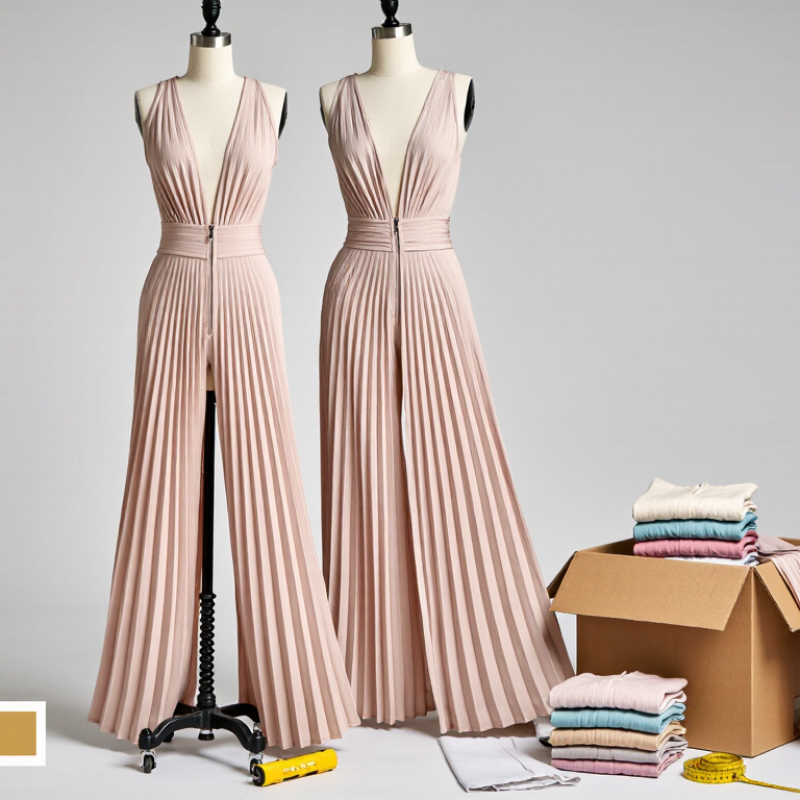
For bulk orders, treat ASTM D5585-21 as a measurement reference, not a guarantee of fit. Its women’s size tables help teams define a consistent base size and grading plan. Confirm the intended customer range before approving samples. Jumpsuits need more than bust, waist, and hip measurements: record torso length, front and back rise, and inseam. Small details matter.
Translate the size chart into a supplier-ready specification sheet. State finished-garment measurements, measurement points, and tolerances for every size. For pleats, specify depth, spacing, direction, and how they should sit at the waist and hip. A crisp sample may soften after washing. Test the fabric and pleat retention before locking the order. Pleats expose errors.
Use fit samples across more than one size, then check movement while sitting, reaching, and walking. A jumpsuit can fit at the waist but pull at the torso. It happens. The National Retail Federation’s 2023 Retail Returns Report estimated a 14.5% return rate across retail, worth $743 billion. That figure is not apparel-specific, but it shows why clear specifications and fit checks matter. Keep signed samples and graded measurement records with the purchase order; review any changes to fabric weight, elastic, or construction before production.
How to Source Pleated Wide Leg Jumpsuits in Bulk? - Define Fit and Pleat Specifications with ASTM D5585-21 Women’s Size Tables
Sample bulk-sourcing specification: Measurements below are proposed finished-garment targets in centimeters, not ASTM body measurements. Use the applicable ASTM D5585-21 body-size table to select the intended wearer size, then confirm the garment ease and fit through a sample fitting before production.
| Finished Garment Point of Measure |
How to Measure |
Size 4 |
Size 6 |
Size 8 |
Size 10 |
Size 12 |
Size 14 |
Tolerance |
| Fit Measurements — Garment Laid Flat |
| Bust width |
Across garment, 2.5 cm below armhole; measure straight across |
46 |
48 |
50 |
52 |
54 |
56 |
±1.0 cm |
| Waist width, relaxed |
Across elastic waist seam without stretching |
37 |
39 |
41 |
43 |
45 |
47 |
±1.0 cm |
| Hip width |
Across garment at the fullest hip point; keep pleats in their natural position |
53 |
55 |
57 |
59 |
61 |
63 |
±1.0 cm |
| Front rise |
From crotch seam intersection to top edge of waistband, following the seam |
31 |
31.5 |
32 |
32.5 |
33 |
33.5 |
±0.7 cm |
| Inseam |
From crotch seam intersection to finished hem along inside leg seam |
76 |
76 |
76 |
76 |
76 |
76 |
±1.0 cm |
| Leg opening width |
Across one finished hem, laid flat |
30 |
31 |
32 |
33 |
34 |
35 |
±1.0 cm |
| Pleat and Production Details — Apply Across the Size Range |
| Front pleat count |
One pressed knife pleat on each front leg; two pleats total. Mirror placement left to right. |
Visual match |
| Pleat intake |
3.0 cm per pleat, measured as total fabric taken into the fold; maintain consistent intake in all sizes. |
±0.3 cm |
| Pleat securing |
Secure from the waistband seam for 8 cm, then release the pleat. Press both pleats in the same direction. |
±0.5 cm |
| Measurement condition |
Measure the finished garment flat after the agreed wash or relaxation process. Do not stretch fabric except when measuring elastic extension. |
— |
Bulk approval note: Treat sizes 4–14 as sample development labels, not as a direct ASTM size conversion. Confirm the selected body-size mapping, fabric shrinkage, wearer ease, grading rules, and production tolerances in the approved tech pack and fit sample.
Choose Fabric: Polyester Was 57% of 2023 Global Fiber Output (Textile Exchange)
How to Source Pleated Wide Leg Jumpsuits in Bulk?
Polyester deserves close attention when choosing fabric for bulk pleated wide leg jumpsuits. Textile Exchange reported that polyester made up 57% of global fiber output in 2023. That scale can make polyester a practical option to investigate, but availability alone does not guarantee the right hand feel or finish. One caveat: a widely used fiber is not automatically the best choice for every design.
Ask suppliers for fabric specifications, including weight, stretch, opacity, and fiber content. For pleats, request a sample and check whether they remain crisp after washing and wearing. Test the fabric under bright light; pale colors can reveal transparency. Small details matter. Confirm that bulk fabric matches the approved sample, and discuss tolerances for shade and weight before placing an order. Polyester types and finishes vary, so avoid assuming that all options drape alike.
Tips: Request swatches from the actual production lot when possible. Compare them beside your chosen lining and trims. Check recycled-content claims against supporting documentation, and avoid relying on a label alone. Test before scaling. If the sample feels stiff or the pleats soften, pause and reassess; this step can be easy to overlook.
Vet Bulk Suppliers Through Audits, Capacity Checks, and Pre-Production Samples
Sourcing pleated wide leg jumpsuits in bulk starts with checking how a supplier controls repeatability, not just how polished its showroom looks. Request recent audit records covering worker training, equipment maintenance, incoming fabric checks, and final inspection. Ask to see the production floor or a live video walkthrough. Look for pleating equipment suited to the agreed fabric and clear records for defects and rework. Small details matter.
Capacity checks should match your order size and delivery window. Ask for the current line plan, monthly output, and any work already booked. Confirm who handles cutting, pleating, sewing, and pressing; undisclosed subcontracting can complicate quality follow-up. Have the supplier explain how it will keep pleat depth, waistband measurements, and inseam length consistent across sizes. A spreadsheet is useful, but compare it with actual machine and staffing capacity. I would not treat a confident promise as proof.
Before bulk production, approve a pre-production sample made with the intended fabric, trims, and construction methods. Check the garment on more than one body size, then measure key points against the spec sheet. Test how the pleats fall after pressing and washing, and note fabric shrinkage or twisting. Record corrections in writing and request a revised sample when fit or drape misses the target. This step can feel slow, but skipping it often makes later fixes harder.
Set Garment Quality Checks Using ISO 2859-1 Sampling Plans
For bulk pleated wide-leg jumpsuits, agree on the inspection plan before production starts. ISO 2859-1 provides lot-by-lot attribute sampling procedures; it does not certify every garment. Record the lot size, inspection level, AQL values, and inspection status in the order file. An AQL is a sampling index, not a promise that every shipment will meet an exact defect rate.
Create a defect list that inspectors can apply consistently. For example, classify skipped crotch seams, broken zippers, or unusable waistbands by agreed severity. Check pleat alignment, garment measurements, stitching, and shade consistency against approved specifications.
Pull samples randomly across cartons and size ranges, rather than choosing only convenient pieces. That detail matters.
Use the standard’s tables to find the sample size code letter and acceptance or rejection numbers for the chosen plan. Train inspectors to measure the same points, such as waist width and inseam, using the same method.
Keep dated records, photos, carton numbers, and results so repeat problems can be traced. Sampling saves time, but it can miss defects. Not foolproof. Review recurring issues with the supplier and adjust inspection status under the plan’s switching rules, rather than changing thresholds after seeing a disappointing result.
Assess Waste Impact: UNEP Estimates 92 Million Tonnes of Textile Waste Annually
How to Source Pleated Wide Leg Jumpsuits in Bulk?
UNEP estimates that the world generates 92 million tonnes of textile waste each year. That figure covers textiles broadly, not jumpsuits alone, but it puts bulk orders in perspective. Every extra size, color, or untested design can leave fabric and finished stock sitting unused. Start with sales forecasts and a focused size range. Ask suppliers how they calculate fabric yield, and request cutting-layout details for the wide-leg pattern. Small improvements matter.
Pleats need careful sampling. Check how the fabric hangs after washing, whether the pleats hold, and how much material each size consumes. Approve a sample before confirming the full order. Then compare planned quantities with realistic demand, rather than ordering extra “just in case.” Some surplus may still happen. Track it.
The Ellen MacArthur Foundation’s 2017 report, A New Textiles Economy, estimated that less than 1% of material used to produce clothing was recycled into new clothing. That points to a practical sourcing priority: reduce avoidable overproduction before relying on recycling. Ask for production-waste figures, leftover-fabric plans, and clear records of order quantities. These checks cannot erase textile waste, and supplier data may be incomplete. Still, they make the trade-offs visible when sourcing pleated wide leg jumpsuits in bulk.