Exploring the Best Please Pleats Styles for Global Buyers?
In the ever-evolving fashion landscape, "Please Pleats" have become a defining feature for many global buyers. Fashion expert Emma Johnson states, “Pleats add a timeless elegance that resonates across cultures.” This reflects the growing appreciation for textures and movement in garments.
The versatility of Please Pleats is noteworthy. They can transform a simple dress into a statement piece. Yet, many buyers may wonder about the best styles to choose. From structured pleats to soft drapes, the options seem endless. Each style tells a different story. However, not every pleat suits every body type, leaving buyers feeling overwhelmed.
The global appeal of Please Pleats raises questions about cultural interpretations. What may be trendy in one region might not resonate in another. Buyers must consider fabric choices and color palettes thoughtfully. Embracing this complexity is crucial. The journey to finding the perfect pleat style may require patience and exploration, but the rewards can be truly transformative.
Defining Pleats: Origins and Types in Fashion History
Pleats have a rich history in fashion, tracing back to ancient civilizations. The origins of pleating can be seen in Egyptian and Roman garments, where it served both functional and aesthetic purposes. These intricate folds not only added elegance but also allowed for ease of movement. A report by the Fashion Institute of Technology indicates that pleats have re-emerged in modern fashion, favored by both designers and consumers.
There are various types of pleats, each with its own character. Knife pleats, sun pleats, and box pleats are among the most popular styles today. Knife pleats are uniform and face one direction, creating a sleek profile. Sun pleats, in contrast, radiate from a central point, offering a more voluminous silhouette. According to market analysis by Global Industry Analysts, the pleated skirt segment is expected to grow significantly, valued at approximately $3 billion by 2025.
However, the resurgence of pleats invites a critical examination. Not every pleat style suits all body types. Tailoring plays a crucial role in achieving a flattering look. Some pleats may add unwanted bulk, especially in specific areas. Buyers must consider fabric choices carefully, as drapability impacts the final appearance. Understanding these nuances is vital for making informed purchasing decisions in the pleat-laden market.
Understanding Different Styles of Pleats: Knife, Box, and More
Pleats have become a popular trend in fashion, captivating global buyers. Different pleat styles can greatly transform garments. Among these, knife pleats and box pleats are essential to understand.
Knife pleats involve a series of folds all going in one direction. This style creates a sleek and sophisticated look. It works well in skirts and dresses. On the other hand, box pleats feature alternating folds, creating a more voluminous silhouette. This style adds depth and is often used in structured pieces. When choosing pleats, consider the overall silhouette you want to achieve.
Tips: Choose knife pleats for a polished appearance. Opt for box pleats to add texture. Always pay attention to fabric choice. Heavier fabrics hold pleats well, while lighter ones may flop.
Reflecting on these styles, it's important to experiment. Find what suits your body shape best. Not every pleat type will work for everyone. Don't hesitate to mix and match different styles to create unique looks. Understanding these details can elevate your style and design choices significantly.
Choosing Pleats for Different Body Types and Occasions
Pleats have gained immense popularity in recent fashion trends. However, selecting the right pleat style for different body types can be challenging. According to a report by IBISWorld, the women's pleated skirt market is expected to grow by 4.3% annually. Understanding how different pleats can enhance or detract from specific body shapes is crucial for buyers.
For curvier figures, box pleats can add structure and balance. They create a great silhouette and can emphasize the waist. A study from Fashion Institute of Design & Merchandising noted that flowy, knife pleats work well for athletic builds. They introduce a feminine flair without clinging too tightly. On the other hand, women with petite frames might opt for micro pleats. These can elongate the appearance of the legs while providing a chic, modern look.
Choosing the right pleat style is not just about appearance; it’s also about the occasion. A formal event may require tailored pleated trousers, while a casual day out could call for a relaxed pleated skirt. The wrong choice may lead to discomfort or an unflattering look. Hence, testing various styles is advisable to find what feels best. Consumers must remain aware of their body shape and occasion to make informed purchasing decisions, ensuring confidence in their fashion choices.
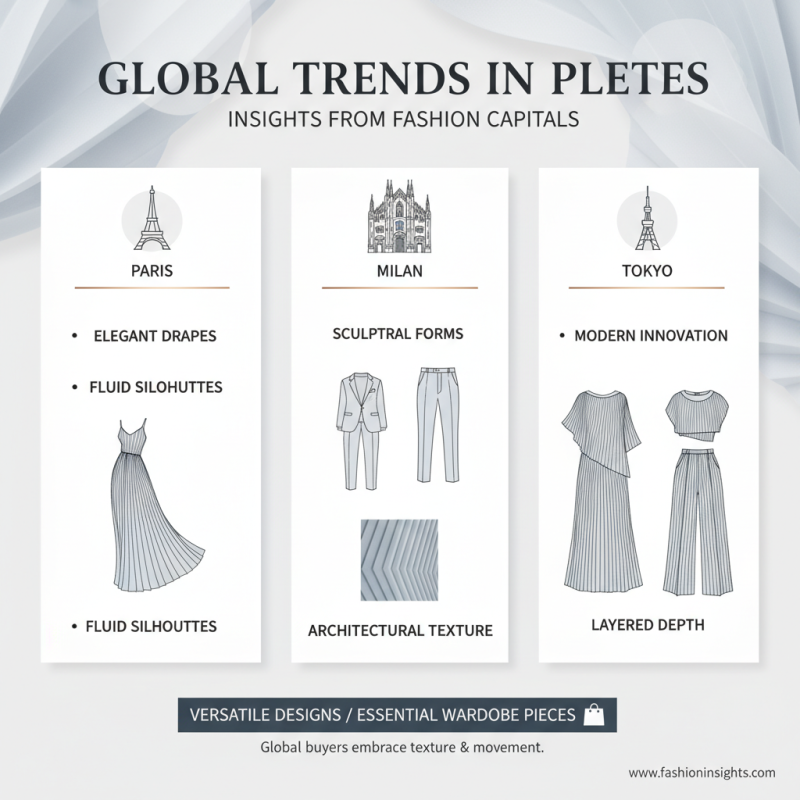
Global Trends in Pleats: Insights from Fashion Capitals
Pleats have re-emerged in fashion, capturing attention in major cities like Paris, Milan, and Tokyo. Their versatility allows for stunning designs in dresses, skirts, and even pants. Global buyers are embracing pleats that add texture and depth to outfits, making them essential pieces for any wardrobe.
In Milan, pleated garments often feature bold colors and experimental cuts, showcasing the city's love for dramatic flair. Meanwhile, Tokyo's street fashion leans towards layered looks, blending traditional styles with modern aesthetics. Such trends highlight how pleats can adapt to various cultural influences. However, not all examples succeed. Some styles may feel overly structured or heavy, lacking the fluid grace the trend aims for.
Fashion experts suggest focusing on the flow and movement of fabric. Soft, lightweight materials often enhance the appeal of pleated designs. Achieving balance is crucial. Pleats should complement the wearer, rather than overwhelm. Taking risks can yield beautiful results, but reflection on fit and style is vital. Celebrating pleats means understanding their potential while recognizing their limitations.
Care and Maintenance Tips for Pleated Garments
Pleated garments are a stylish addition to any wardrobe but require careful upkeep. The unique design of pleats can be delicate. Regular maintenance ensures they stay crisp and attractive. A gentle hand wash is the safest method for cleaning these fabrics. When washing, avoid harsh detergents. They can strip the fabric of its finish. Instead, opt for mild soap to keep pleats looking fresh.
Drying is another critical step. Never wring out pleated items, as this can distort the pleats. Instead, lay the garment flat on a clean towel. Roll it up gently to soak up excess water. Once most of the moisture is gone, hang it to dry in a shady area. Direct sunlight can cause colors to fade. When ironing, use a low setting and place a cloth between the iron and the fabric. This prevents burns and keeps the pleats sharp.
Storing pleated garments also matters. Hanging them in a wardrobe often leads to unwanted creases. Consider using padded hangers to maintain shape. If you must fold them, place tissue paper between pleats to avoid creasing. These simple yet effective practices enhance the longevity of pleated styles. Remember, reflecting on your care methods can help improve your garment's lifespan.
Exploring the Best Pleats Styles for Global Buyers
This bar chart represents the popularity scores of different pleat styles among global buyers. As observed, Style E stands out with the highest score, indicating strong preference, while Style D has the lowest score, suggesting a need for improvement in design or marketing.